September 25, 2012
-
Top Five Short Stories of All Time
Being enrolled in the intro English class after already taking two Creative Writing courses... well, it sucks. But right now we're focusing a lot on literary elements, symbolism, the three types of irony, pathos ethos largos, bleh bleh bleh... it honestly feels like a high school class. What is a little cool about this class, is that we're studying these elements only through short stories. I love short stories! So, here is my list of the top five short stories of all time, as voted by me and a few people I know.
5. The Tell Tale Heart

The short story begins with a sense of fear and urgency. The unnamed narrator explains to the reader that he is nervous, but in no way mad. The narrator begins to calmly tell a whole story of how he kills an old man that he loves and takes care of for no reason other than the old man’s one dreadful blue eye. Every night at midnight, he opens the old man’s bedroom door and shines just a thin ray of light onto the Evil Eye. He explains that he cannot kill the man with his eye closed, so nighttime continues to pass and in the morning he acts completely normal with the poor old man.
On the eighth night, the old man wakes up as he peers his head into the room. The man cries out wondering who is there, but the narrator does not respond. Instead, he stands in the shadows of the dark room where the old man cannot see him and waits there for a while, listening to the old man’s terror. He finally shines a thin ray of light from the lantern on the vulture eye, and it was open! He still does not kill him until he hears the loud beating of the old man’s heart, growing louder and louder by the minute. Fearing that one of the neighbor’s will hear the heartbeat; he leaps forward and drags the man to the floor. He then throws the heavy bed over him, waiting until the muffled heartbeat stops. He hides the corpse of the man in the floorboards of the bedroom chamber.
At four o’clock, three policemen knock at the door. The narrator confidently answers it, thinking that he now has nothing to fear. They explain that they are there because a neighbor called after hearing a loud shriek. The man tells them that it was simply his shriek in a dream, and that the old man is out of town. He invited the police in, and even leads them right up to the bedroom chamber. He brings chairs into the room and invites them to rest, placing his own chair right over the old man’s body. While chatting with the police, he begins to hear the thumping sound of the old man’s heart. Thinking that they must hear it too and know his guilt, he confesses his murderous deed and tells the men to pull up the floorboards.
4. A Clean and Well Lighted Place

Late in the early morning hours, in a Spanish cafe, an old man drinks brandy. A young waiter is angry; he wishes that the old man would leave so that he and an older waiter could close the cafe and go home. He insults the deaf old man and is painfully indifferent to the older waiter's feelings when he states that "an old man is a nasty thing." The older waiter, however, realizes that the old man drinking brandy after brandy is not nasty; he is only lonely. No doubt, that's the reason why the old man tried to hang himself last week.
When the old man leaves, the waiters close the cafe. The young waiter leaves for home, and the older waiter walks to an all-night cafe where, thinking about the terrible emptiness of the old man's life which he keenly identifies with, he orders a cup of nada from the waiter. A cup of nothing. The man who takes the order thinks that the old waiter is just another crazy old man; he brings him coffee.
Finishing the coffee, the older waiter begins his trudge homeward. Sleep is hours away. Until then, he must try to cope bravely with the dark nothingness of the night.
3. The Yellow Wallpaper

The narrator and her physician husband, John, have rented a mansion for the summer so that she can recuperate from a “slight hysterical tendency.” Although the narrator does not believe that she is actually ill, John is convinced that she is suffering from “neurasthenia” and prescribes the “rest cure” treatment. She is confined to bed rest in a former nursery room and is forbidden from working or writing. The spacious, sunlit room has yellow wallpaper – stripped off in two places – with a hideous, chaotic pattern. The narrator detests the wallpaper, but John refuses to change rooms, arguing that the nursery is best-suited for her recovery.
Two weeks later, the narrator’s condition has worsened. She feels a constant sense of anxiety and fatigue and can barely muster enough energy to write in her secret journal. Fortunately, their nanny, Mary, takes care of their baby, and John's sister, Jennie, is a perfect housekeeper. The narrator's irritation with the wallpaper grows; she discovers a recurring pattern of bulbous eyes and broken necks, as well as the faint image of a skulking figure stuck behind the pattern.
As more days pass, the narrator grows increasingly anxious and depressed. The wallpaper provides her only stimulation, and she spends the majority of her time studying its confusing patterns which, as she asserts, are almost as “good as gymnastics.” The image of the figure stooping down and "creeping" around behind the wallpaper becomes clearer each day. By moonlight, she can see very distinctly that the figure is a woman trapped behind bars. The narrator attempts to convince John to leave the house for a visit with relatives, but he refuses, and the narrator does not feel comfortable confiding in him about her discoveries in the wallpaper. Moreover, she is becoming paranoid that John and Jennie are also interested in the wallpaper and is determined that only she will uncover its secrets.
The narrator's health improves as her interest in the wallpaper deepens. She suspects that Jennie and John are observing her behavior, but her only concern is that they become obstacles to her and the wallpaper. She also begins to notice that the distinct "yellow smell" of the wallpaper has spread over the house, following her even when she goes for rides. At night, the woman in the wallpaper shakes the bars in the pattern violently as she tries to break through them, but she cannot break free. The swirling pattern has strangled the heads of the many women who have tried to break through the wallpaper. The narrator begins to hallucinate, believing that she has seen the woman creeping surreptitiously outside in the sunlight. The narrator intends to peel off the wallpaper before she leaves the house in two days.
That night, the narrator helps the woman in the wallpaper by peeling off the wallpaper halfway around the room. The next day, Jennie is shocked, but the narrator convinces her that she only stripped the wallpaper out of spite. Jennie is able to understand the desire to peel off the ugly wallpaper and does not tell John that anything is out of the ordinary. The next night, the narrator locks herself in her room and continues stripping the wallpaper. She hears shrieks within the wallpaper as she tears it off. She contemplates jumping out of a window, but the bars prevent that; besides, she is afraid of all of the women that are creeping about outside of the house. When morning comes, the narrator has peeled off all of the wallpaper and begun to creep around the perimeter of the room. John eventually breaks into the room, but the narrator does not recognize him. She informs him that she has peeled off most of the wallpaper so that now no one can put her back inside the walls. John faints, and the narrator continues creeping around the room over him.
2. Araby
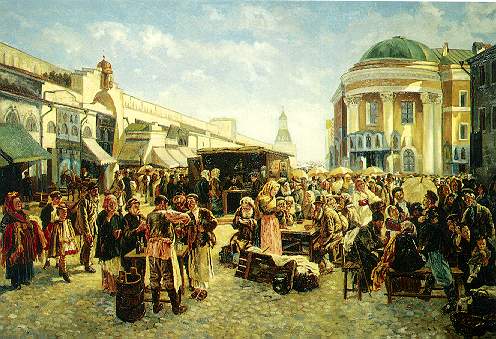
The narrator, an unnamed boy, describes the North Dublin street on which his house is located. He thinks about the priest who died in the house before his family moved in and the games that he and his friends played in the street. He recalls how they would run through the back lanes of the houses and hide in the shadows when they reached the street again, hoping to avoid people in the neighborhood, particularly the boy’s uncle or the sister of his friend Mangan. The sister often comes to the front of their house to call the brother, a moment that the narrator savors.
Every day begins for this narrator with such glimpses of Mangan’s sister. He places himself in the front room of his house so he can see her leave her house, and then he rushes out to walk behind her quietly until finally passing her. The narrator and Mangan’s sister talk little, but she is always in his thoughts. He thinks about her when he accompanies his aunt to do food shopping on Saturday evening in the busy marketplace and when he sits in the back room of his house alone. The narrator’s infatuation is so intense that he fears he will never gather the courage to speak with the girl and express his feelings.
One morning, Mangan’s sister asks the narrator if he plans to go to Araby, a Dublin bazaar. She notes that she cannot attend, as she has already committed to attend a retreat with her school. Having recovered from the shock of the conversation, the narrator offers to bring her something from the bazaar. This brief meeting launches the narrator into a period of eager, restless waiting and fidgety tension in anticipation of the bazaar. He cannot focus in school. He finds the lessons tedious, and they distract him from thinking about Mangan’s sister.
On the morning of the bazaar the narrator reminds his uncle that he plans to attend the event so that the uncle will return home early and provide train fare. Yet dinner passes and a guest visits, but the uncle does not return. The narrator impatiently endures the time passing, until at 9 p.m. the uncle finally returns, unbothered that he has forgotten about the narrator’s plans. Reciting the epigram “All work and no play makes Jack a dull boy,” the uncle gives the narrator the money and asks him if he knows the poem “The Arab’s Farewell to his Steed.” The narrator leaves just as his uncle begins to recite the lines, and, thanks to eternally slow trains, arrives at the bazaar just before 10 p.m., when it is starting to close down. He approaches one stall that is still open, but buys nothing, feeling unwanted by the woman watching over the goods. With no purchase for Mangan’s sister, the narrator stands angrily in the deserted bazaar as the lights go out.
1. All Summer in a Day

The story is about a class of school children on Venus, which in this story is a world of constant rainstorms, where the sun is only visible for one hour every seven years.
One of the children, Margot, moved to Venus from Earth five years earlier, and she is the only one in her class to remember sunshine, since it shone regularly on earth. She describes the sun as "a penny", or "like a fire in the stove", and the other children, being too young to have ever seen it themselves, refuse to believe her accounting of it. Out of jealousy, she is bullied and ostracized by the other students and finally locked in a closet during the time the sun is due to come out.
As the sun is about to appear, their teacher arrives to take the class outside to enjoy their only hour of sunshine, and in their astonishment and joy, they all forget about Margot. They run, play, skip, jump, and prance about, savoring every second of their newly found freedom. "It's much better than sun lamps!" one of them cries.
Suddenly, a girl feels a raindrop on her. Thunder sounds, and they run back inside. Then, one of them remembers Margot, who is still locked in the closet. They stand frozen ashamed for what they have done, unable to "meet each other's glances."
The precious sun has come and gone, and because of their despicable act, Margot has missed it. They walk slowly and silently towards the closet, and let her out.
There they are, my favorite short stories, most of the general public would agree - while a good percentile would think I'm crazy for even listing All Summer in a Day. I love short stories. More action, less pages. Short stories - great works of literature.

Comments (3)
My favorite short story was written by Ernest Hemingway and it was simply "For sale: baby shoes, never worn." So much emotion packed in six words.
@godfatherofgreenbay - That's called "flash fiction"
You only chose Araby because you thought it'd make you look smart.
Comments are closed.